As summer winds down and cooler weather makes its way to Mid-Missouri, the real estate market enters a new season, too. Fall buyers are often thinking beyond summer curb appeal and backyard.

Dated: August 28 2023
Views: 2489
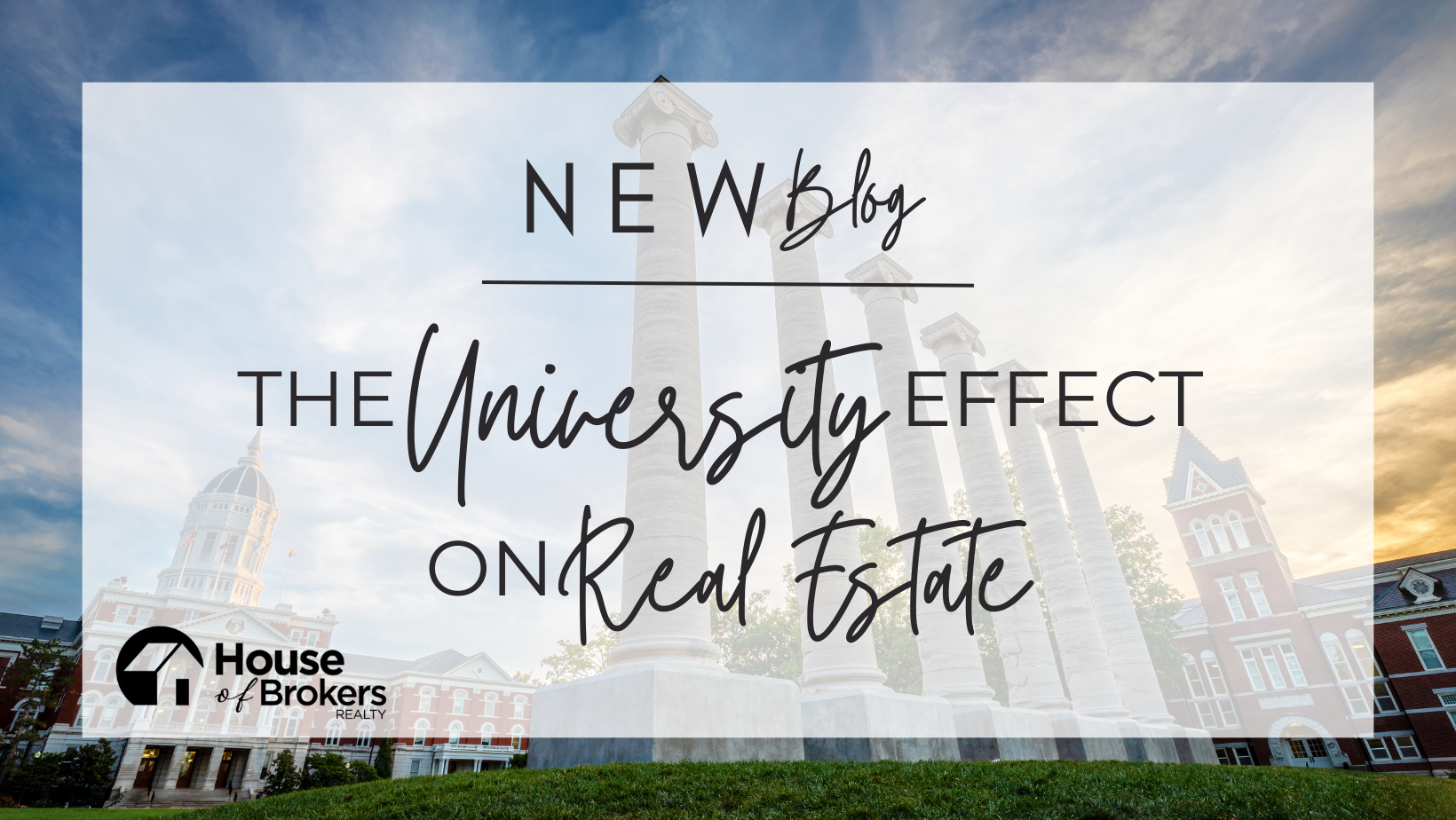
The connection between higher education institutions and real estate markets is a dynamic and fascinating one. University towns are known for their vibrant culture, economic activity, and intellectual energy. In Missouri, the presence of renowned universities and colleges has a profound impact on the state's real estate landscape. In this comprehensive exploration, we'll delve into how university towns in Missouri influence housing trends, rental markets, property values, and the overall real estate ecosystem.
The influx of students into university towns creates a substantial demand for student housing. While some students opt for dormitories, many seek off-campus living options, including rental apartments and houses. This demand drives the growth of rental markets in these areas, presenting investment opportunities for landlords and property owners.
University towns often enjoy stable rental markets due to the consistent demand for student housing. Investors in these areas can benefit from reliable rental income, especially if they provide well-maintained and affordable housing options that cater to the student demographic.
Apart from traditional students, university towns also attract faculty members, staff, and researchers who require housing. This diversity within the rental market contributes to its stability and resilience, even during economic fluctuations.
The presence of a prestigious university can drive demand for real estate in the surrounding areas. The university's reputation and the influx of students and faculty can lead to consistent appreciation of property values over time, making it an attractive option for long-term real estate investment.
University towns often experience spillover effects, where the economic activity and cultural attractions associated with the university extend beyond the campus boundaries. As a result, nearby neighborhoods can witness an increase in demand for housing and higher property values.
In some cases, the presence of a university can contribute to urban revitalization efforts. As students and faculty seek housing and amenities in the vicinity, previously neglected areas may undergo transformation, leading to increased property values and improved infrastructure.
University towns need to strike a balance between catering to student housing needs and offering housing options for families and non-student residents. This equilibrium ensures a diverse and sustainable real estate market.
Real estate investors can capitalize on this balance by diversifying their portfolios to include both student-focused properties and family-oriented housing. This strategy can provide stable returns while mitigating risks associated with fluctuations in student enrollment.
Universities are not only centers of education but also sources of employment. Faculty, staff, researchers, and administrative personnel contribute to the local economy by creating job opportunities. This, in turn, fuels demand for housing in the area.
University towns tend to have a unique cultural vibrancy. The presence of academic and cultural events, performances, lectures, and art exhibitions enriches the community, making it an appealing place to live and invest in.
Universities are hubs of innovation and entrepreneurship. As research and startups thrive, they can attract professionals seeking to be part of cutting-edge developments, leading to an increased demand for housing.
The impact of university towns on Missouri's real estate market is profound and multifaceted. These towns not only drive demand for student housing but also contribute to the appreciation of property values, urban revitalization, and cultural enrichment. Balancing the needs of students and families while fostering economic growth is essential for maintaining a healthy and vibrant real estate market. As universities continue to play a crucial role in shaping their communities, their influence on Missouri's real estate landscape remains an exciting and integral aspect of the state's growth and development.

I serve as the Director of Marketing for Weichert, Realtors® – House of Brokers, where I lead our brand strategy, agent marketing, company events, and community engagement efforts. My passio....
As summer winds down and cooler weather makes its way to Mid-Missouri, the real estate market enters a new season, too. Fall buyers are often thinking beyond summer curb appeal and backyard.
Are we getting a little too much déjà vu from the 1970s?As a Realtor® who pays attention to economic trends—not just what is happening on the MLS—I’ve been
A house can tell a very different story in October than it does in June.Landscaping has tremendous visual power. In fact, 97% of REALTORS® say curb appeal is important in attracting a buyer. But
You don't need a shopping cart full of seasonal décor to give your home a fresh look for fall. With about $100 and a little creativity, you can make a noticeable difference.Start at the front
 These Properties are provided courtesy of Broker Reciprocity/IDX Lake Of The Ozarks Board of REALTORS® and Bagnell Dam Association of REALTORS® MLS, Inc. Multiple Listing Service. This information is copyrighted by The Lake Of The Ozarks Board of REALTORS® and The Bagnell Dam Association of REALTORS® MLS, Inc. Multiple Listing Service. Information is being provided for consumers' personal, non-commercial use and may not be used for any purpose other than to identify prospective properties
consumers may be interested in purchasing. All information deemed reliable but not guaranteed and should be independently verified. All properties are subject to prior sale, change, or withdrawal. Information herein deemed reliable but not guaranteed. Copyright 2026 Lake Of The Ozarks Board of Realtors, Bagnell Dam Assoc. of Realtors. Last Updated: September 24, 2026 12:35 PM UTC
Show More...
These Properties are provided courtesy of Broker Reciprocity/IDX Lake Of The Ozarks Board of REALTORS® and Bagnell Dam Association of REALTORS® MLS, Inc. Multiple Listing Service. This information is copyrighted by The Lake Of The Ozarks Board of REALTORS® and The Bagnell Dam Association of REALTORS® MLS, Inc. Multiple Listing Service. Information is being provided for consumers' personal, non-commercial use and may not be used for any purpose other than to identify prospective properties
consumers may be interested in purchasing. All information deemed reliable but not guaranteed and should be independently verified. All properties are subject to prior sale, change, or withdrawal. Information herein deemed reliable but not guaranteed. Copyright 2026 Lake Of The Ozarks Board of Realtors, Bagnell Dam Assoc. of Realtors. Last Updated: September 24, 2026 12:35 PM UTC
Show More...
 Listings displaying the MARIS logo are courtesy of the participants of Mid America Regional Information Systems Internet Data Exchange. IDX information is provided exclusively for consumers' personal, non-commercial use and may not be used for any purpose other than to identify prospective properties consumers may be interested in purchasing.
Information is deemed reliable but is not guaranteed.
Listings displaying the MARIS logo are courtesy of the participants of Mid America Regional Information Systems Internet Data Exchange. IDX information is provided exclusively for consumers' personal, non-commercial use and may not be used for any purpose other than to identify prospective properties consumers may be interested in purchasing.
Information is deemed reliable but is not guaranteed.
33. Required DMCA Notice
The Digital Millennium Copyright Act of 1998, 17 U.S.C. §512, the DMCA, provides recourse for copyright owners who believe that material appearing on the Internet infringes their rights under U.S. copyright law. If you believe in good faith that any content or material made available in connection with our website or services infringes your copyright, you (or your agent) may send us a notice requesting that the content or material be removed, or access to it blocked. Notices must be sent in writing by email to DMCAnotice@MLSGrid.com. The DMCA requires that your notice of alleged copyright infringement include the following information: (1) description of the copyrighted work that is the subject of claimed infringement; (2) description of the alleged infringing content and information sufficient to permit us to locate the content; (3) contact information for you, including your address, telephone number and email address; (4) a statement by you that you have a good faith belief that the content in the manner complained of is not authorized by the copyright owner, or its agent, or by the operation of any law; (5) a statement by you, signed under penalty of perjury, that the information in the notification is accurate and that you have the authority to enforce the copyrights that are claimed to be infringed; and (6) a physical or electronic signature of the copyright owner or a person authorized to act on the copyright owners behalf. Failure to include all of the above information may result in the delay of the processing of your complaint.
 The territorial jurisdiction of the Jefferson City Area Board of REALTORS®, Inc. includes Cole, Callaway, Moniteau, and Osage Counties. This representation is based in whole or part on data supplied by the Multiple Listing Service of the Jefferson City Area Board of REALTORS®, Inc. Neither the Board nor its MLS guarantees or is any way responsible for its accuracy. Data maintained by the Board or its MLS may not reflect all real estate activity in the market.

Listing information comes in part from the Internet Data Exchange (IDX) of the Columbia Board of REALTORS® or its Multiple Listing Service. The information being provided is deemed reliable but not guaranteed, and all information should be verified by the consumer. In consideration for the receipt of the information on this page, the recipient agrees to use the information solely for the private non-commercial purpose of identifying a property in which the recipient has a good faith interest in acquiring. Last Update: #Update Data Copyright© 2026 Columbia Board of REALTORS®. All rights reserved.
Show More...
 Heart Of Missouri Board Of REALTORS® All information deemed reliable but not guaranteed. All properties are subject to prior sale, change or withdrawal. Neither listing broker(s) or information provider(s) shall be responsible for any typographical errors, misinformation, misprints and shall be held totally harmless. Listing(s) information is provided for consumer's personal, non-commercial use and may not be used for any purpose other than to identify prospective properties consumers may be
interested in purchasing. The data relating to real estate for sale on this website comes in part from the Internet Data Exchange program of the Multiple Listing Service. Real estate listings held by brokerage firms other than Weichert, Realtors® - House of Brokers may be marked with the Internet Data Exchange logo and detailed information about those properties will include the name of the listing broker(s) when required by the MLS. Copyright ©2026 All rights reserved.
Last Updated: September 24, 2026 7:24 PM UTC
Show More...
Heart Of Missouri Board Of REALTORS® All information deemed reliable but not guaranteed. All properties are subject to prior sale, change or withdrawal. Neither listing broker(s) or information provider(s) shall be responsible for any typographical errors, misinformation, misprints and shall be held totally harmless. Listing(s) information is provided for consumer's personal, non-commercial use and may not be used for any purpose other than to identify prospective properties consumers may be
interested in purchasing. The data relating to real estate for sale on this website comes in part from the Internet Data Exchange program of the Multiple Listing Service. Real estate listings held by brokerage firms other than Weichert, Realtors® - House of Brokers may be marked with the Internet Data Exchange logo and detailed information about those properties will include the name of the listing broker(s) when required by the MLS. Copyright ©2026 All rights reserved.
Last Updated: September 24, 2026 7:24 PM UTC
Show More...
 All information deemed reliable but not guaranteed. All properties are subject to prior sale, change or withdrawal. Neither listing broker(s) or information provider(s) shall be responsible for any typographical errors, misinformation, misprints and shall be held totally harmless. Listing(s) information is provided for consumer's personal, non-commercial use and may not be used for any purpose other than to identify prospective properties consumers may be interested in purchasing. The data relating
to real estate for sale on this website comes in part from the Internet Data Exchange program of the Multiple Listing Service. Real estate listings held by brokerage firms other than Weichert, Realtors® - House of Brokers may be marked with the Internet Data Exchange logo and detailed information about those properties will include the name of the listing broker(s) when required by the MLS. Copyright ©2026 All rights reserved.
Last Updated: September 24, 2026 7:29 PM UTC
Show More...
All information deemed reliable but not guaranteed. All properties are subject to prior sale, change or withdrawal. Neither listing broker(s) or information provider(s) shall be responsible for any typographical errors, misinformation, misprints and shall be held totally harmless. Listing(s) information is provided for consumer's personal, non-commercial use and may not be used for any purpose other than to identify prospective properties consumers may be interested in purchasing. The data relating
to real estate for sale on this website comes in part from the Internet Data Exchange program of the Multiple Listing Service. Real estate listings held by brokerage firms other than Weichert, Realtors® - House of Brokers may be marked with the Internet Data Exchange logo and detailed information about those properties will include the name of the listing broker(s) when required by the MLS. Copyright ©2026 All rights reserved.
Last Updated: September 24, 2026 7:29 PM UTC
Show More...
 All information deemed reliable but not guaranteed. All properties are subject to prior sale, change or withdrawal. Neither listing broker(s) or information provider(s) shall be responsible for any typographical errors, misinformation, misprints and shall be held totally harmless. Listing(s) information is provided for consumer's personal, non-commercial use and may not be used for any purpose other than to identify prospective properties consumers may be interested in purchasing. The data relating
to real estate for sale on this website comes in part from the Internet Data Exchange program of the Multiple Listing Service. The
statistical data contained herein has not been verified by the CMBR MLS and the publication of information hereof is not a representation or warranty of any fact whatsoever. Real estate listings held by brokerage firms other than Weichert, Realtors® - House of Brokers may be marked with the Internet Data Exchange logo and detailed information about those properties will include the name of the listing broker(s) when required by the MLS. Copyright ©2026 All rights reserved.
Last Updated: September 24, 2026 7:39 PM UTC
Show More...
All information deemed reliable but not guaranteed. All properties are subject to prior sale, change or withdrawal. Neither listing broker(s) or information provider(s) shall be responsible for any typographical errors, misinformation, misprints and shall be held totally harmless. Listing(s) information is provided for consumer's personal, non-commercial use and may not be used for any purpose other than to identify prospective properties consumers may be interested in purchasing. The data relating
to real estate for sale on this website comes in part from the Internet Data Exchange program of the Multiple Listing Service. The
statistical data contained herein has not been verified by the CMBR MLS and the publication of information hereof is not a representation or warranty of any fact whatsoever. Real estate listings held by brokerage firms other than Weichert, Realtors® - House of Brokers may be marked with the Internet Data Exchange logo and detailed information about those properties will include the name of the listing broker(s) when required by the MLS. Copyright ©2026 All rights reserved.
Last Updated: September 24, 2026 7:39 PM UTC
Show More...
 All information deemed reliable but not guaranteed. All properties are subject to prior sale, change or withdrawal. Neither listing broker(s) or information provider(s) shall be responsible for any typographical errors, misinformation, misprints and shall be held totally harmless. Listing(s) information is provided for consumer's personal, non-commercial use and may not be used for any purpose other than to identify prospective properties consumers may be interested in purchasing. The data relating
to real estate for sale on this website comes in part from the Internet Data Exchange program of the Multiple Listing Service. Real estate listings held by brokerage firms other than Weichert, Realtors® - House of Brokers may be marked with the Internet Data Exchange logo and detailed information about those properties will include the name of the listing broker(s) when required by the MLS. Copyright ©2026 All rights reserved.
Last Updated: September 24, 2026 6:51 PM UTC
Show More...
All information deemed reliable but not guaranteed. All properties are subject to prior sale, change or withdrawal. Neither listing broker(s) or information provider(s) shall be responsible for any typographical errors, misinformation, misprints and shall be held totally harmless. Listing(s) information is provided for consumer's personal, non-commercial use and may not be used for any purpose other than to identify prospective properties consumers may be interested in purchasing. The data relating
to real estate for sale on this website comes in part from the Internet Data Exchange program of the Multiple Listing Service. Real estate listings held by brokerage firms other than Weichert, Realtors® - House of Brokers may be marked with the Internet Data Exchange logo and detailed information about those properties will include the name of the listing broker(s) when required by the MLS. Copyright ©2026 All rights reserved.
Last Updated: September 24, 2026 6:51 PM UTC
Show More...
